Senator's canvas shoes
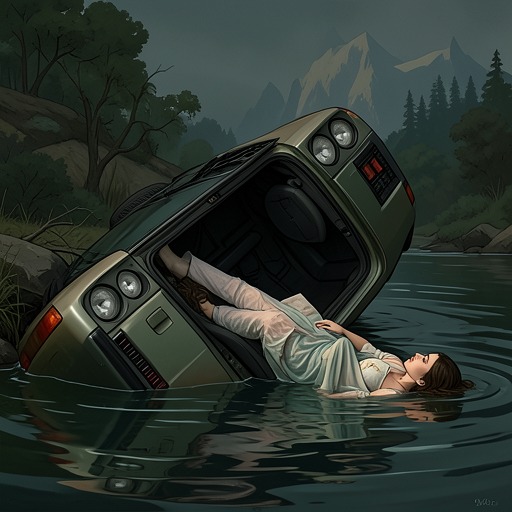
Black Water (Joyce Carol Oates Edition)The Senator’s canvas shoe is an ordinary part of his clothing until the Toyota plunges into Indian Creek and he tears free from Kelly Kelleher’s grasp. Left behind in her hand as he escapes, the shoe becomes the scene’s starkest physical remainder: proof of contact, a failed lifeline, and an object that fixes the difference between his escape and her continued struggle inside the sinking car.
Before the Accident
The shoe first belongs to the Senator’s unremarkable presence beside Kelly. As they travel along Old Ferry Road, his manner of driving recalls to her the way her father sometimes drove after wordless disagreements with her mother. Kelly is alert rather than apprehensive, memorizing the adventure; the language of a daughter being told to sit up straight and reassured that she is someone’s little girl shadows the scene with an older pattern of dependence and care. The shoe has not yet become conspicuous. It is simply part of the man who is driving her.
Earlier that day, Kelly and the Senator’s encounter on the beach has already joined physical sensation to uncertainty about whose desire is governing the moment. On their walk through the dunes, his fingers grip her bare shoulders; she feels shy and eager while thinking that something is going to happen and cannot be stopped. Later, when he kisses her, she recognizes a familiar anxiety: the feeling that because she has made a man want her, she cannot refuse him. These details do not make the shoe a symbol in advance; they establish the bodily and relational circumstances that give it force when the accident abruptly changes what the two of them can do.
The car turns onto Old Ferry Road, a badly rutted sandy track no longer maintained by Grayling Township and no longer marked by a sign. The Senator is headed in the right direction for Brockden’s Landing but has taken the obsolete road, with the new paved Ferry Road’s turn three-quarters of a mile behind them. When the Toyota skids at speed, hits and breaks through a guardrail, and plunges into black water, the passenger door buckles and the car sinks on its side. The shoe’s later importance begins in this changed landscape: a familiar object is now caught in a confined, disorienting struggle for escape.
The Shoe in the Sinking Car
In the water, the Senator fumbles at his safety belt and forces himself through the door against the pressure of the water and gravity. The opening lies overhead in Kelly’s inverted, bewildered perception. She fights to get free and grabs his muscular forearm, then his trouser leg and foot, trying to hold onto the person escaping through the only way out.
Her grip does not stop him. He kicks to get clear, and his crepe-soled canvas shoe comes off in her hand. Its removal is not presented as a deliberate gift or rescue gesture: it is the accidental result of Kelly’s desperate grasp and his effort to escape. The object transfers from his foot to her broken-nailed fingers at the instant their fates separate. He gets out; she remains in the car, calling for help and begging him not to leave her.
The shoe’s weight in the scene is therefore emotional as well as physical. Kelly has been able to grasp something tangible, but it is not the Senator’s hand and cannot lead her out of the wreck. It is an empty shoe, detached from the body she is trying to reach. Her question about what she has managed to seize collapses the distance between expectation and fact: what remains of him in her possession is not a promise of rescue, but the thing his escape has shed.
Abandonment and the Imagined Aftermath
Kelly’s perception does not settle immediately into certainty that the Senator has abandoned her. She tells herself he will come back from the direction he went, and later understands his kicking as blind panic rather than a considered wish to hurt her. The text preserves that belief alongside the physical evidence: he has forced himself out, kicked her while struggling to get free, and left the shoe behind. Her faith in his return cannot turn the shoe into a lifeline.
The object also draws Kelly’s attention back to the intimacy that preceded the crash. She is ashamed of having clutched at his trouser leg and shoe as he kicked free. The shoe’s soaked, abandoned presence is bound up with her humiliation at having been reduced, in the emergency, to grasping at whatever part of him she could reach. Her imagined response from her girlfriends makes the object a possible source of ridicule: she pictures Buffy St. John laughing at the absurdity of the story, with the shoe standing in for the whole humiliating scene.
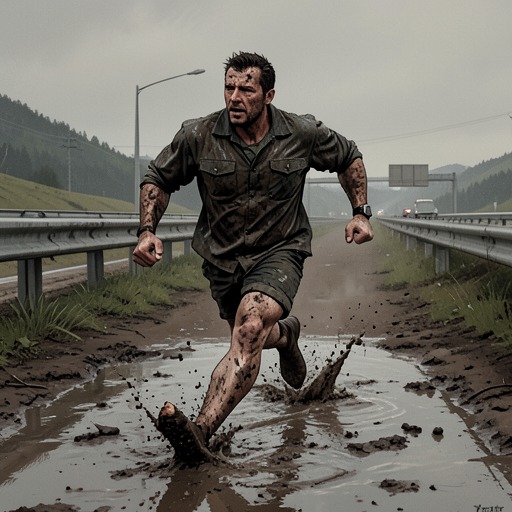
That imagined laughter belongs to a different moment from the sinking car. The narrative briefly pictures the Senator limping away from the marsh with one shoe on and one off, then turns back to the sunny Fourth of July before the crash. Later, the Senator’s own escape is described in the same concrete terms: he reaches the highway barefoot in one foot, filthy, shivering, and panicked. These views make the missing shoe a recurring marker of the accident’s aftermath, even as the story’s movement between the imagined future and the unfolding emergency prevents the reader from treating every anticipated consequence as something Kelly already knows.
Material Evidence and Narrative Meaning
The shoe’s force comes from the mismatch between its ordinary function and its new visibility. Before the crash, it is merely footwear; under the water, its crepe sole and the pressure of the Senator’s foot become part of Kelly’s struggle to hold on. Once it is pulled free, the object is both painfully concrete and radically insufficient. Kelly has a piece of the Senator, but not the person she needs to escape.
Its recurrence also makes the physical separation legible without relying on a later explanation. The scene is dark, flooded, and confusing; Kelly cannot orient herself and has no name ready to call out. The shoe, by contrast, is specific and touchable. It records the moment the Senator’s body passes beyond her reach, and it accompanies his one-shoed flight back toward the highway. The object links the two bodies across the separation while emphasizing that only one of them has made it out of the car.
The shoe is not a keepsake Kelly chooses to retain, nor does the evidence establish that it survives the water or comes into anyone else’s possession. Its importance lies in the brief interval when she holds it and in the recollections and imagined scenes that return to it. A commonplace item becomes the material remainder of a failed rescue, a sign of the Senator’s escape, and the detail through which Kelly’s fear, dependence, and shame converge.